

What Is Hibachi Cooking?
- Paul Yu
- Aug 3
- 4 min read

Hibachi cooking is a style of Japanese-influenced cooking where a chef prepares your meal on a large flat iron griddle directly in front of you. Meat, seafood, rice, and vegetables are cooked on the hot surface while you watch, then served straight off the griddle.
It's dinner and entertainment at the same time. That combination is the whole appeal — and it's why people book it for parties instead of ordering catering trays.
How the cooking actually works
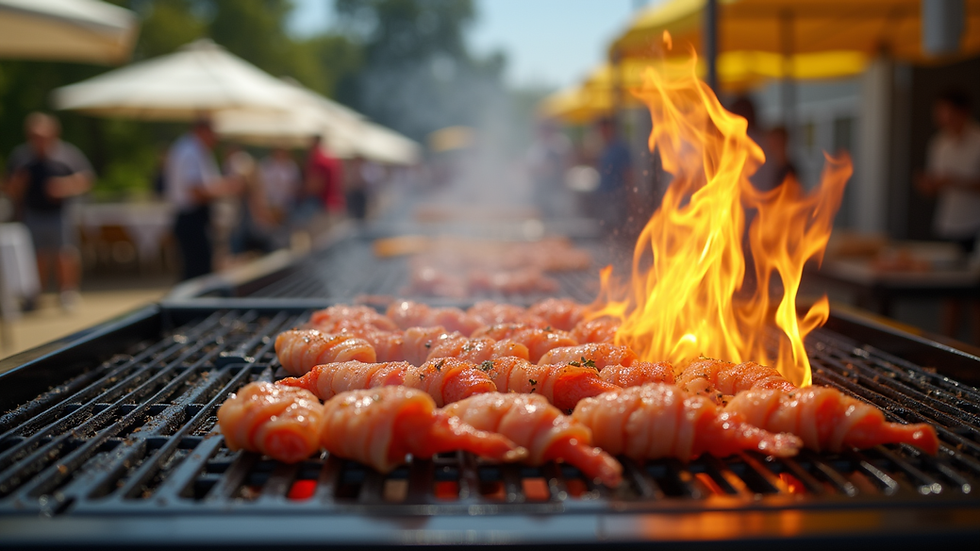
Everything happens on one large flat steel surface running north of 600°F. There are no grates and no open flame under the food.
That flat surface is what makes the format possible. The chef divides it into zones at different temperatures — a searing area for proteins, a cooler area for rice and noodles, a section for vegetables — and works all of them at once. That's how a table of twenty eats together instead of in shifts.
High heat is the point. When protein hits a surface that hot, the moisture flashes off on contact and you get browning and crust. On a cooler surface the meat releases its own liquid and poaches in it — gray edges, no sear, flat flavor. The difference between good hibachi and bad hibachi is largely that one variable.
What food is served at hibachi?
A full hibachi meal generally includes:
Proteins — chicken, steak, and shrimp are the standard three. Salmon, scallops, filet mignon, and lobster tail are common upgrades.
Hibachi fried rice — cooked on the griddle with egg, onion, and butter, chopped and tossed as it cooks
Noodles — usually a soy-and-butter yakisoba-style noodle
Vegetables — zucchini, onion, mushroom, carrot, broccoli, seared on the flat top
Salad and edamame — served ahead of the cooking as guests arrive
Sauces — the part people remember most
Seasoning is simpler than people expect: soy sauce, garlic, butter, oil, ginger, sesame. The flavor comes from the sear and the butter far more than from any complicated seasoning.
The sauces
Three usually show up, and they do different jobs.
Yum-yum sauce — the pink-orange creamy one. Mayonnaise-based with tomato, butter, paprika, garlic, and a little sugar. This is an American invention rather than something you'd find in Japan, and it's the one guests ask about by name.
Ginger sauce — thin, sharp, savory, built on fresh ginger and onion. Cuts the richness of the butter. Usually served with steak.
Mustard or sesame sauce — nuttier and more assertive, common with chicken and seafood.
A caterer who brings one sauce is cutting a corner most people won't name but will notice.
The order things come out
A hibachi meal has a rhythm, and it isn't the same as a buffet.
Salad and edamame go out first, while guests are still arriving and the griddle is heating. Vegetables and fried rice cook next — they hold well and give people something to eat while the proteins go on. Proteins come last, cooked in rounds and served immediately off the surface.
Nothing sits under a heat lamp. Food goes from griddle to plate to guest, which is the actual reason hibachi eats better than tray catering at the same price.
Why the chef does tricks
The onion volcano, the flying spatula, the egg rolled up the arm — it's easy to file that under filler.
It isn't. Try stacking an onion volcano at home with a spatula sometime, then try it with forty people watching and dinner cooking underneath it. The theater is a skill, and it's also a signal: a chef running tricks while timing three proteins across a full griddle has control of their station. Someone who skips it usually isn't skipping it by choice.
Hibachi at a restaurant vs. hibachi at your house
At a restaurant you sit around a built-in griddle with strangers at the same table, on the restaurant's schedule, with a fixed menu.
At a private event the chef brings the griddle to you. Your guests, your timeline, your menu, and nobody is turning your table for the next seating. Mobile hibachi also usually costs less per head than a comparable restaurant meal once you account for drinks and tip — and there's no driving.
The tradeoff is equipment. A restaurant griddle is plumbed in and enormous. A mobile setup has to bring that heat with it, which is why not every operator can hold temperature once they're past the first twenty plates.
One note on the word
Strictly speaking, a hibachi is a Japanese charcoal fire bowl, and the flat-griddle restaurant format is teppanyaki. In American usage "hibachi" means the whole experience, and everyone in the industry understands it that way. We wrote about that distinction — and the one situation where it genuinely matters when you book — in hibachi vs. teppanyaki.
Booking hibachi for an event
We cook on flat steel griddles at private events across Rhode Island, southeastern Massachusetts, and eastern Connecticut. Every guest gets chicken, steak, and shrimp — not pick-one — with a chef and a dedicated attendant at every event. If you want the practical detail, we've written about what makes good hibachi catering and what it costs.
SIFU Hibachi & Sushi Catering — Cranston, RI.
Comments